
Interdependence in Knowledge Work

Overview
Interdependence is a fundamental aspect of modern knowledge work, where the success of individual efforts is intricately linked to the collective capabilities and collaboration within teams and organisations. Unlike traditional work models that emphasised independence and individual task completion, interdependence in knowledge work recognises that the complex problems and challenges faced by organisations today require a blend of diverse skills, perspectives, and expertise that no single individual can possess.
Interdependence implies a need for people to work together in a coordinated manner, sharing information, resources, and responsibilities to achieve a common goal. It's about creating an environment where collaboration is not just encouraged but is an essential part of the workflow. This approach fosters a culture of mutual support, where the success of one is seen as contributing to the success of all.
The concept of interdependence has its roots in the early studies of social and organisational psychology, with significant contributions from the fields of systems theory and sociology. It gained prominence in the latter half of the 20th century as businesses and scholars began to recognise the limitations of hierarchical, siloed organisational structures in addressing the rapidly changing and increasingly complex business environment.
The term 'interdependence' was popularised in the context of organisational behaviour and teamwork, where it was identified as a key factor distinguishing high-performing teams from less effective ones. It reflects a shift from competitive individualism towards a more collaborative, team-oriented approach.
Why Acknowledging Interdependence Is Important
The significance of interdependence in knowledge work cannot be overstated. In a landscape marked by rapid technological advancements, globalisation, and evolving customer expectations, the ability to collaborate effectively across boundaries has become critical. Here are several reasons why interdependence is vital in knowledge work:
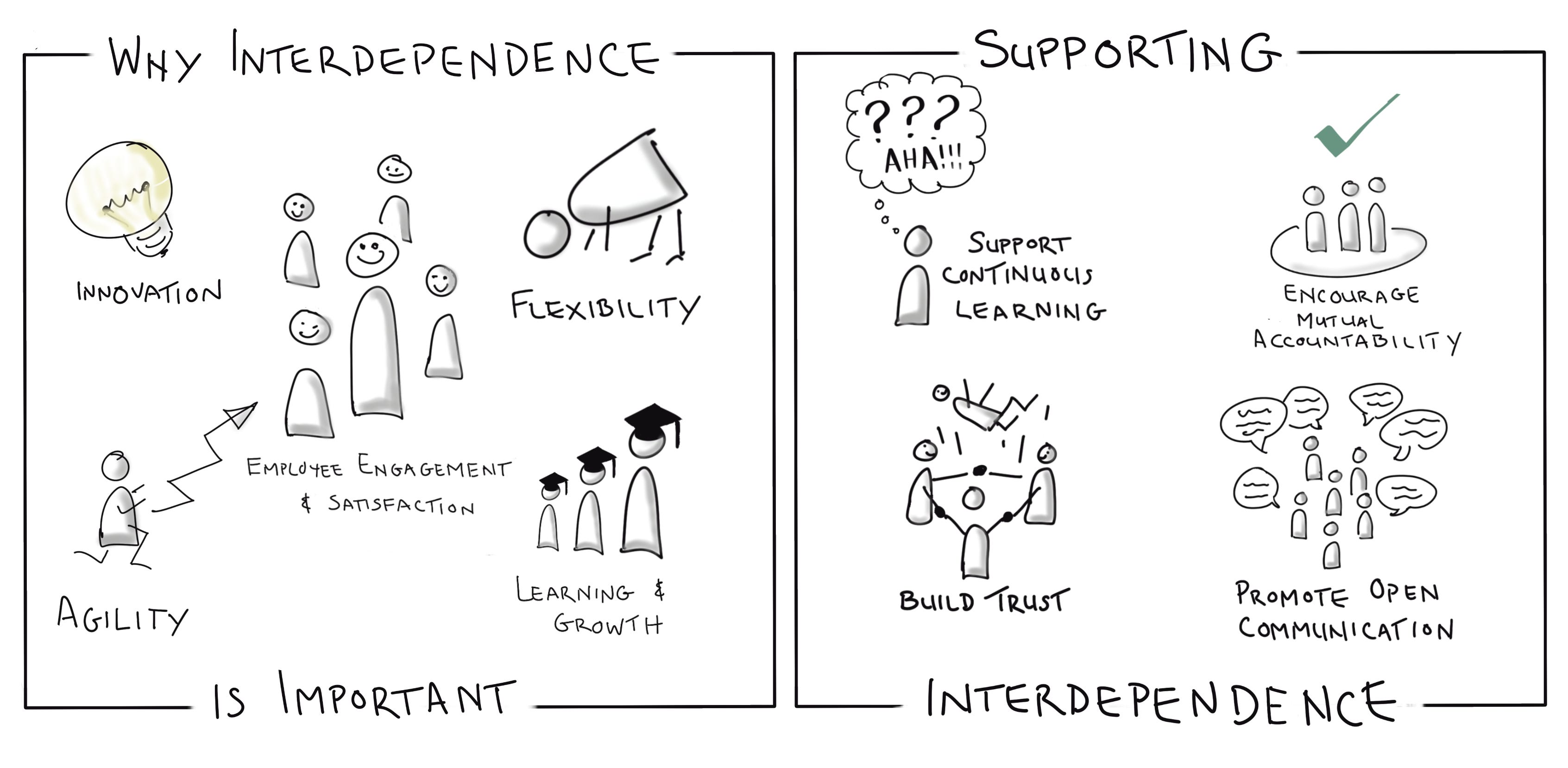
Complex Problem Solving: Today’s business challenges are too complex for linear, individualistic approaches. Interdependence allows for pooling diverse skills and perspectives necessary for innovative solutions.
Innovation: The cross-fertilisation of ideas from different fields and areas of expertise sparks innovation. Interdependent teams can leverage their varied backgrounds to generate breakthrough ideas and solutions.
Agility and Flexibility: In an agile environment, teams must quickly adapt to change. Interdependence, with its emphasis on collaboration and shared goals, enables teams to pivot more easily and effectively than those operating in silos.
Employee Engagement and Satisfaction: Working in an interdependent manner fosters a sense of belonging and purpose. When employees see how their work contributes to the broader objectives, it enhances motivation and job satisfaction.
Learning and Growth: Interdependent work settings provide rich opportunities for personal and professional growth. Team members learn from each other, gaining insights and skills that would be difficult to acquire in isolation.
Creating An Interdependent Culture
Fostering interdependence in knowledge work involves more than just encouraging teamwork; it requires intentional design of organisational structures, processes, and cultures that support and reward collaborative efforts. This includes:
Building Trust: Trust is the foundation of effective collaboration. Leaders must model trustworthiness and create environments where team members feel safe to share ideas, take risks, and admit mistakes.
Promoting Open Communication: Establishing channels for open, transparent communication facilitates the sharing of knowledge and coordination needed for interdependent work.
Encouraging Mutual Accountability: In an interdependent team, members hold each other accountable for outcomes, which strengthens commitment and drives performance.
Supporting Continuous Learning: Given the ever-evolving nature of knowledge work, creating opportunities for continuous learning and development is essential to maintain the relevance and effectiveness of interdependent teams.
Interdependence in knowledge work is not just a strategy for enhancing efficiency or productivity; it's a paradigm that reflects the interconnectedness of our modern world. By embracing and cultivating interdependence, organisations can create resilient, innovative, and high-performing teams capable of navigating the complexities of today’s business landscape.
Further reading
- For an in-depth look into the progression from dependence to independence and ultimately to interdependence as discussed by Stephen R. Covey, refer to the Wikipedia page on "The 7 Habits of Highly Effective People"
- "The New Declaration of Interdependence" on Psychology Today, which discusses the critical role of interdependence in fostering healthy communities and individuals.
- For an understanding of the psychological dynamics of dependency, counter-dependency, and interdependence within personal relationships, read "Dependency, Counter-Dependency, and Interdependency" on Psychology Today.